
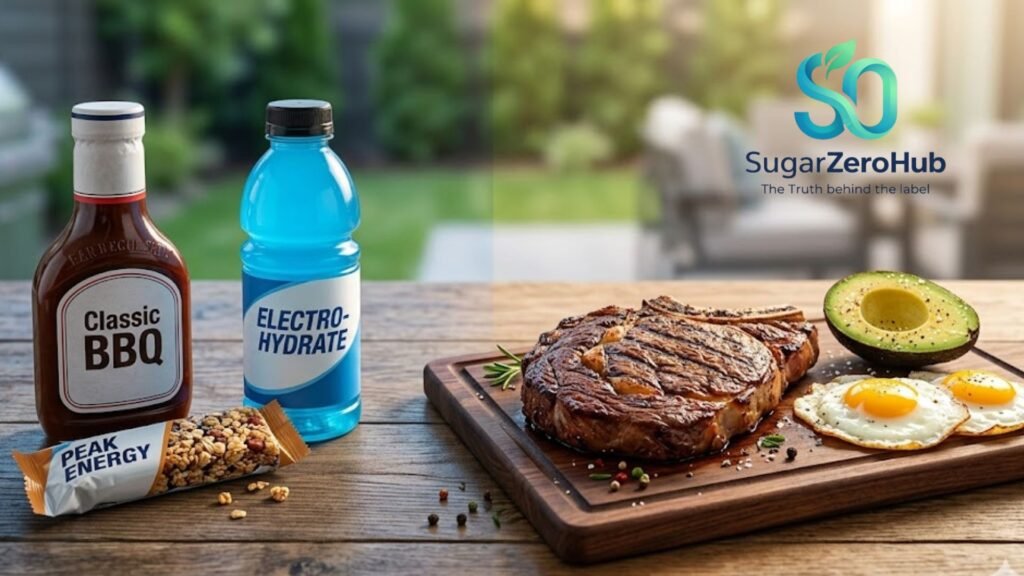
When most men notice their waistline expanding, the first instinct is to blame the weekend beers. The “beer belly” is such a common term that we naturally associate stubborn abdominal fat exclusively with alcohol. So, what happens when you cut out the alcohol, hit the gym, and the belly still won’t budge?
The truth is, the classic “beer belly” is rarely just about beer. It is actually a symptom of a much deeper metabolic issue: insulin resistance driven by hidden sugars. If you are struggling to lose that hard, stubborn belly fat, it is time to look past the alcohol and examine what is really happening inside your body.
The Science of the “Beer Belly” (Visceral Fat)
Not all body fat is created equal. The fat that forms a hard, protruding belly is called visceral fat. Unlike subcutaneous fat (the soft fat just under the skin), visceral fat packs itself deep inside your abdomen, wrapping around vital organs like your liver and intestines.
Visceral fat is highly active. It releases inflammatory chemicals into your bloodstream, severely disrupts your hormones, and directly leads to lower testosterone levels and compromised energy production. But what causes it to build up in the first place? The answer is insulin.
How Hidden Sugars Drive Visceral Fat
Insulin is your body’s primary fat-storage hormone. Every time you eat carbohydrates or sugar, your blood glucose rises, and your pancreas pumps out insulin to clear it from your bloodstream.
When you consume a diet high in processed foods and hidden sugars—such as commercial pasta sauces, “healthy” granola bars, flavored yogurts, and sodas—your insulin levels remain chronically high. Over time, your cells become resistant to this insulin. When your body doesn’t know where else to put the excess glucose, it converts it directly into visceral fat around your midsection. You don’t need to drink a drop of alcohol to develop a “beer belly”; a diet full of hidden sugars will do exactly the same thing.
The Fructose and Fatty Liver Connection
While glucose can be used by every cell in your body for energy, fructose (found in high-fructose corn syrup, agave, and fruit juices) can only be metabolized by your liver. When you overload your liver with liquid sugars, it processes them the exact same way it processes alcohol. This rapid overload leads to Non-Alcoholic Fatty Liver Disease (NAFLD), which is a primary driver of the hard, distended belly.
How to Shrink the Belly for Good
To finally get rid of stubborn visceral fat, you have to lower your insulin levels. You cannot out-exercise a diet full of hidden sugars. Apply this 3-step metabolic framework:
- Read the Labels: Start checking your condiments, sauces, and “health” foods for added sugars like dextrose, maltodextrin, and high-fructose corn syrup.
- Prioritize Protein and Healthy Fats: Swap processed carbs for high-quality proteins (like wild-caught fish and grass-fed steak) and healthy fats (like avocados and olive oil). These foods keep your insulin levels perfectly flat.
- Try Intermittent Fasting: Giving your digestion a break for 14 to 16 hours is one of the fastest ways to drop insulin levels and force your body to burn visceral fat for fuel.
Conclusion
By taking control of your blood sugar, you will not only shrink your waistline but also naturally restore your testosterone levels and reclaim your physical energy. Visceral fat reduction is not about starvation; it is about hormonal correction.
Read The Ultimate 2026 Guide to Mastering Your Blood Sugar here to fully understand insulin optimization and metabolic health.