
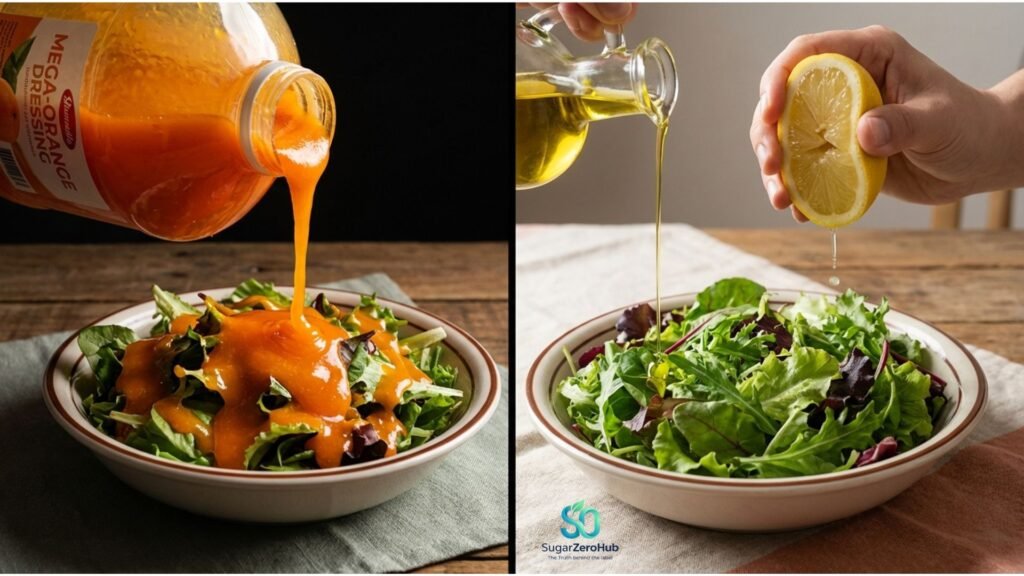
You made the tough, responsible choice at lunch. While everyone else ordered burgers and fries, you ordered a large grilled chicken salad. You skipped the dessert. Yet, two hours later, you feel that familiar wave of fatigue, your cravings are out of control, and your blood sugar is inexplicably high.
How could a healthy salad trigger a glucose spike?
The answer is hiding in plain sight, poured right on top of your meal. The food industry has mastered the art of hiding massive amounts of sugar in foods that don’t even taste sweet. Welcome to the “Savory Sugar Trap.”
1. The Salad Dressing Deception
The biggest mistake you can make when trying to eat healthy is reaching for a bottle of store-bought salad dressing, especially if it is labeled “Low-Fat” or “Fat-Free.”
When food manufacturers remove the fat from a dressing, it tastes like cardboard. To make it edible again, they pump it full of sugar, high-fructose corn syrup, and artificial thickeners. A standard serving of commercial honey mustard, raspberry vinaigrette, or French dressing can easily contain more sugar than a chocolate chip cookie. You are taking a metabolically perfect bowl of greens and drenching it in liquid candy.
2. The Ketchup and BBQ Sauce Bombs
Condiments are the silent assassins of a low-carb diet. You might cook a perfectly healthy piece of meat, but the moment you add a dollop of traditional ketchup or barbecue sauce, you are triggering an insulin spike.
Just one single tablespoon of standard ketchup contains about 4 grams of sugar. Most people use three or four tablespoons without thinking twice. Barbecue sauce is even worse; it is essentially meat-flavored syrup, heavily reliant on High-Fructose Corn Syrup (HFCS). HFCS is particularly dangerous because it bypasses normal digestion and goes straight to your liver, rapidly driving insulin resistance and creating visceral belly fat.
3. The “Healthy” Teriyaki and Stir-Fry Sauces
You might think you are making a great choice by cooking a vegetable and chicken stir-fry for dinner. However, traditional teriyaki sauces and pre-packaged stir-fry glazes are thick, syrupy reductions made predominantly of soy sauce and pure brown sugar or cane syrup. A single serving can easily pack 15 to 20 grams of hidden carbohydrates.
How to Swap and Survive
You do not have to eat dry, flavorless food to protect your blood sugar. You just have to make smart, strategic swaps:
- For Salads: Throw away the bottled dressings. Use high-quality extra virgin olive oil, a squeeze of fresh lemon, apple cider vinegar, and sea salt. It is cheaper, tastes better, and actively lowers your glucose response.
- For Condiments: Switch to plain yellow mustard or spicy brown mustard, which naturally contain zero sugar. If you love ketchup, look for specific “No Sugar Added” brands that use tomatoes and vinegar without the hidden syrups.
- For Cooking: Flavor your meats with dry spice rubs (paprika, garlic powder, cumin) instead of sticky, sugary glazes.
To permanently protect your metabolism, you have to stop trusting the front labels of bottles and start understanding how everyday ingredients interact with your hormones.
Stop falling for the industry traps: Read The Ultimate 2026 Guide to Mastering Your Blood Sugar here
Conclusion
Sugar isn’t just in the dessert aisle; it is hiding in your fridge door. By ditching heavily processed, sugar-laden condiments and replacing them with natural fats, vinegars, and spices, you can enjoy flavorful, savory meals that keep your blood sugar perfectly flat and your metabolism firing on all cylinders.