
Preventing Type 2 Diabetes after 50 is not about eating less; it’s about eating smarter. One of the most effective strategies to lower your A1C and improve insulin sensitivity is prioritizing high-quality lean proteins and fibrous vegetables over refined carbohydrates. This simple shift prevents the dangerous glucose “rollercoaster” that exhausts your pancreas and leads to chronic metabolic disease.
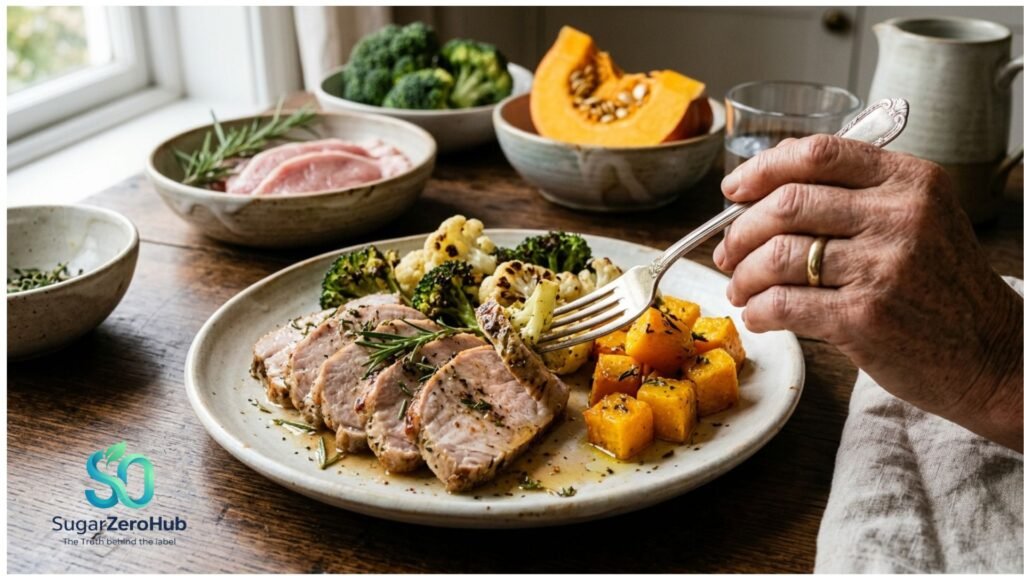
Our “Metabolic Guard” Roasted Pork Loin is a perfect example of a meal that satisfies your hunger while protecting your cells. It combines the satiating power of lean protein with the anti-inflammatory benefits of roasted cruciferous vegetables and fiber-dense pumpkin.
The Science of Satiety and Insulin
When you consume lean protein like pork loin, your body releases hormones that signal fullness to your brain much faster than when you eat carbs. More importantly, protein does not trigger a sharp insulin response. By pairing this with roasted broccoli and cauliflower—both rich in a compound called sulforaphane—você está ativamente combatendo a inflamação celular que causa a resistência à insulina.
Why Roasted Pork and Fiber-Rich Roots Work
Many people fear “roots” like pumpkin when managing blood sugar. However, when roasted with healthy fats and paired with protein, the fiber in pumpkin slows down sugar absorption significantly. This meal provides a steady stream of energy, keeping your mood stable and your cravings at bay for hours.
The Low-Glycemic Roasted Pork & Veggie Recipe
This tray-bake recipe is practical, professional, and perfect for a stress-free dinner that supports your long-term health goals.
Ingredients:
- 1.5 lb Lean Pork Loin
- 2 cups Broccoli florets
- 2 cups Cauliflower florets
- 1 cup Pumpkin, cubed (skin on for extra fiber)
- 3 tablespoons Extra Virgin Olive Oil or Avocado Oil
- Garlic, rosemary, sea salt, and black pepper to taste
Instructions:
- The Prep: Preheat your oven to 400°F (200°C).
- The Seasoning: Rub the pork loin with garlic, salt, pepper, and rosemary. Place it in the center of a large baking sheet.
- The Veggies: In a bowl, toss the broccoli, cauliflower, and pumpkin with olive oil and a pinch of salt. Arrange them around the pork on the baking sheet.
- The Roast: Bake for 30–35 minutes or until the pork reaches an internal temperature of 145°F (63°C) and the vegetables are tender and slightly caramelized. Let the meat rest for 5 minutes before slicing to keep it juicy.
Taking control of your dinner plate is the fastest way to rewrite your health story. To see how this fits into a complete, science-backed lifestyle, Read The Ultimate 2026 Guide to Mastering Your Blood Sugar here and discover the daily habits of a resilient metabolism.
Conclusion
Adopting a low-carb, high-protein lifestyle is the single most effective tool for preventing and managing Type 2 Diabetes. This Roasted Pork Loin feast proves that metabolic health can be incredibly flavorful and satisfying. By focusing on whole, unprocessed ingredients like lean meats and fibrous vegetables, you are providing your body with the tools it needs to maintain stable glucose levels and vibrant energy for years to come.