
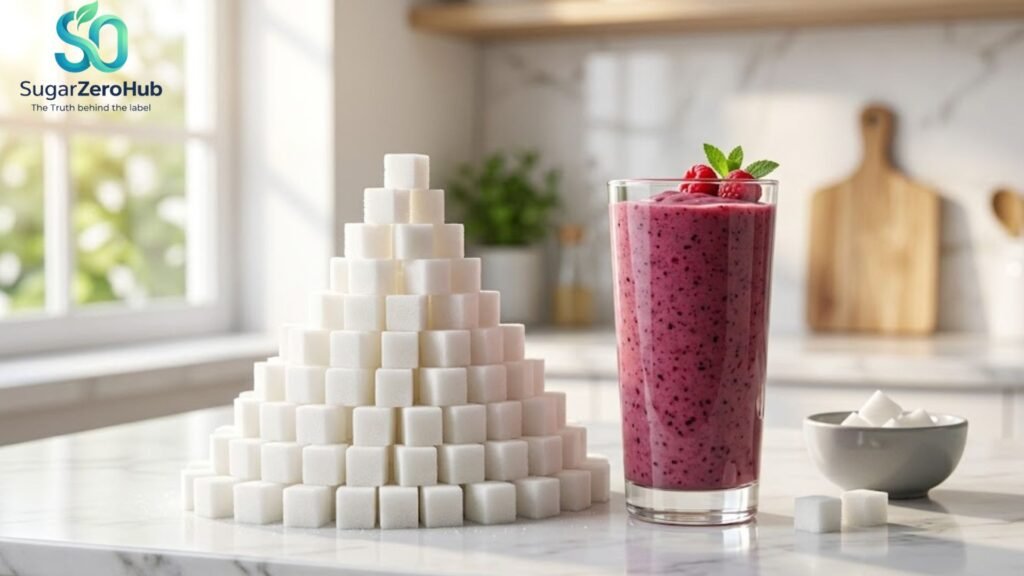
Walking into a health food store and ordering a large, freshly blended fruit smoothie feels like the ultimate healthy choice. It’s packed with vitamins, antioxidants, and usually brightly colored. However, from a metabolic standpoint, that smoothie is often indistinguishable from a can of soda.
The danger lies not in the fruit itself, but in the mechanical process of blending.
The Destruction of the Fiber Matrix
When you eat a whole apple or a handful of berries, the natural sugars (fructose) are trapped inside a fibrous cellular matrix. This fiber acts as a biological net. As you digest the whole fruit, the fiber slows down the absorption of fructose in your gut, preventing a sudden spike in blood sugar.
When you put that same fruit into a high-speed blender, you completely pulverize that protective fiber matrix. You are effectively pre-digesting the fruit and extracting the pure liquid sugar.
A Direct Hit to the Liver
Unlike glucose, which can be used by any cell in your body, fructose can only be processed by your liver. When you drink a pulverized fruit smoothie, a massive payload of liquid fructose hits your liver all at once, with no fiber to slow it down.
The liver quickly becomes overwhelmed by this sudden influx. To handle the excess, it converts the liquid fructose directly into fat (triglycerides). Over time, this daily “healthy” habit directly drives Non-Alcoholic Fatty Liver Disease (NAFLD) and severe insulin resistance.
How to Drink Smart
You don’t have to ban smoothies entirely, but you must change the formula. Stop using bananas, mangoes, and fruit juices as the base. Instead, build your smoothies around high-quality protein powder, healthy fats (like avocado or almond butter), and leafy greens. If you want fruit, add a small handful of whole berries, which are naturally lower in sugar.
Don’t let clever marketing sabotage your metabolism. Uncover more hidden food dangers at SugarZeroHub.