
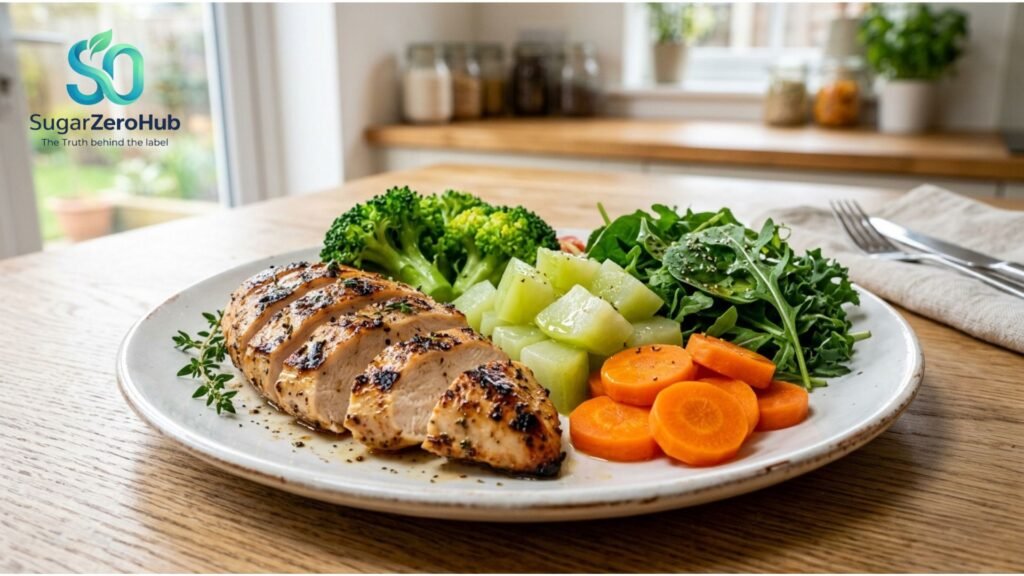
Shifting Your Body from Storage to Burning Mode
When it comes to sustainable weight loss, the obsolete narrative of “eat less, move more” completely ignores how your hormones control your weight. To burn stubborn visceral fat effectively, you must flip your internal metabolic switch from lipid storage to lipid oxidation. This transition is entirely regulated by insulin—the master storage hormone.
When your diet is flooded with fast-burning carbohydrates, insulin levels remain continuously elevated, creating a chemical barrier that prevents your cells from accessing stored fat for energy. By prioritizing lean, high-satiety proteins paired with specific low-glycemic structural fibers, you force your circulating insulin down. This hormonal environment signals your body that it is safe to release trapped energy reserves, transforming your metabolism into an efficient fat-burning engine.
The Thermic Effect and Satiety Mechanics of Lean Protein
Grilled chicken breast is a nutritional powerhouse for fat loss. It provides high-quality protein that preserves your lean muscle tissue while keeping your metabolic rate high. Muscle mass is your primary metabolic engine; the more lean muscle you protect during a weight loss protocol, the higher your resting energy expenditure remains.
Furthermore, protein has the highest Thermic Effect of Food (TEF) compared to any other macronutrient. Your body must expend roughly 20% to 30% of the calories consumed from protein just to break down its complex peptide bonds during digestion. This chemical process means a significant portion of the energy from chicken breast is immediately dissipated as metabolic heat, rather than being stored as body fat.
Micronutrient Infrastructure: Chayote, Broccoli, and Carrots
Steaming your vegetables preserves their vital micronutrient profiles while providing the essential structural fibers your gut biome needs for proper metabolic signaling.
- Chayote (Sechium edule): Often overlooked in Western diets, chayote is a low-calorie powerhouse that is rich in water and metabolic fibers. It expands in the stomach to trigger stretch receptors that signal fullness to the brain, completely preventing post-meal cravings without raising your glycemic load.
- Broccoli: A crucial cruciferous vegetable that contains glucosinolates and sulforaphane. These active compounds support phase II liver detoxification, helping your body clear metabolic waste efficiently as fat cells shrink.
- Carrots: When steamed in moderate portions, carrots supply essential beta-carotene and vitamin A without threatening your low-carb threshold. They introduce a natural touch of sweetness that makes a fat-loss protocol highly sustainable.
The “Fat-Burn” Plate Recipe
This clean, nutrient-dense meal is engineered to maximize satiety while keeping your fat-burning pathways running smoothly.
Ingredients:
- 6 oz (170g) organic skinless chicken breast, seasoned with herbs and sea salt.
- 1 cup of steamed organic broccoli florets.
- 1/2 organic chayote, cubed and gently steamed.
- 1/2 organic carrot, sliced thinly and steamed.
- A generous bed of dark raw leafy greens (Arugula, Watercress, or Spinach).
- 1 tablespoon of extra virgin olive oil (for healthy fat soluble vitamin absorption).
Instructions:
- Season the chicken breast with garlic, pink salt, and fresh lemon juice. Grill in a non-stick pan until golden and juicy.
- Steam the broccoli, chayote cubes, and carrot slices until they are al dente—tender but still retaining their structural bite and vibrant color.
- Arrange the fresh raw greens on a plate, add the grilled chicken breast, and arrange the steamed vegetables neatly alongside.
- Drizzle the entire plate with the tablespoon of raw extra virgin olive oil and a dash of organic apple cider vinegar to further improve post-meal insulin sensitivity.
Securing Your Long-Term Metabolic Blueprint
Stabilizing your daily blood sugar with structured meals like this clean protein and vegetable plate is the most effective way to eliminate the sudden energy crashes and intense hunger pangs that sabotage most weight loss efforts. However, managing your weight is just one element of a healthy, fully optimized system. Your body’s ability to burn fat efficiently is tied directly to how well you control your overall glucose baseline.
Read The Ultimate 2026 Guide to Mastering Your Blood Sugar here to fully understand insulin optimization and metabolic health.
Conclusion: Consistency Over Restriction
Sustainable weight loss should never feel like biological punishment. By focusing on nutrient-dense, low-glycemic whole foods, you easily nourish your cells, support your lean muscle architecture, and unlock your body’s natural capacity to burn its own fat stores for clean, all-day energy.